
Summary
Medical emergencies rarely give families time to prepare. One moment, everything seems normal. The next, you’re rushing to the hospital after a fall, sudden illness, chest pain, or an unexpected call from a doctor.
In those stressful moments, even simple tasks—finding prescription glasses, searching for medication lists, grabbing a phone charger, or remembering important medical documents—can feel overwhelming. Valuable time is often spent packing instead of focusing on the person who needs care.
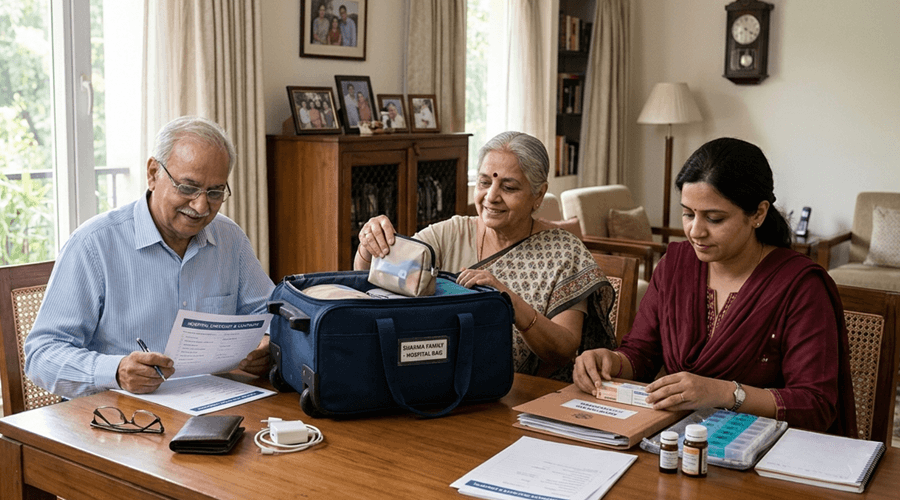
Preparing a hospital bag in advance isn’t about expecting something bad to happen. It’s about making sure your family is ready if it ever does. A well-organised hospital bag can reduce stress, improve communication with healthcare professionals, and help older adults feel more comfortable during an unexpected hospital stay.
In this guide, we’ll explain why every senior should have a hospital bag ready, what essentials to include, what many families forget to pack, and how keeping it updated can make a difficult day just a little easier.
Why Prepare a Hospital Bag Before an Emergency Happens?
Emergencies are unpredictable.
Whether it’s a sudden illness, a fall at home, difficulty breathing, or a doctor’s recommendation for immediate admission, families often have only minutes to leave for the hospital.
During those moments, people naturally focus on getting medical help as quickly as possible. Packing becomes an afterthought.
Later, they realise they’ve forgotten:
- Daily medications
- Identity documents
- Eyeglasses
- Hearing aids
- Mobile phone chargers
- Medical records
- Comfortable clothing
These missing essentials may seem minor, but they can create unnecessary stress once the immediate emergency has passed.
Preparing a hospital bag ahead of time means one less thing to worry about when emotions are already running high.
A Hospital Bag Is About More Than Clothes
Many people think of a hospital bag as a small suitcase with pyjamas and toiletries.
For older adults, it’s much more than that.
A thoughtfully packed bag supports:
- Better communication with doctors
- Faster access to important medical information
- Greater comfort during hospitalisation
- Reduced stress for family caregivers
- Safer transitions between home and hospital
Instead of scrambling to gather important items from different rooms, families can focus on supporting their loved one.
Essential Documents Every Senior Should Keep Ready
One of the biggest challenges during hospital admission is locating important paperwork.
Keeping these documents together in a waterproof folder inside the hospital bag can save valuable time.
| Document | Why It’s Important |
|---|---|
| Government-issued photo ID | Required during registration and verification |
| Health insurance card or policy details | Helps with admission and billing processes |
| List of current medications | Allows doctors to understand ongoing treatment quickly |
| Allergy information | Helps prevent medication-related complications |
| Medical history summary | Provides important background for healthcare providers |
| Contact details for family members | Makes communication easier during treatment |
| Copies of recent medical reports | Gives doctors access to recent diagnoses and test results |
| Advance care documents (if applicable) | Helps ensure healthcare decisions reflect the individual’s wishes |
Consider keeping both printed copies and digital backups whenever possible.
Why a Medication List Matters More Than the Medicines Themselves
Many families bring medication strips to the hospital but forget to include a complete list.
A written medication list should include:
- Medicine names
- Dosage
- Frequency
- Why each medicine is taken
- Prescribing doctor’s name (if known)
This information helps healthcare professionals understand ongoing treatment, avoid duplicate medications, and identify potential drug interactions.
Update the list whenever prescriptions change.
Comfort Items That Can Make a Hospital Stay Easier
Hospital care focuses on treatment.
Comfort often comes from familiar belongings.
Simple items can help older adults feel more relaxed during an unfamiliar experience.
Consider packing:
- Comfortable nightwear
- Non-slip slippers
- Warm sweater or light blanket
- Toothbrush and toothpaste
- Soap and moisturiser
- Lip balm
- Hairbrush or comb
- Extra undergarments
- Tissues
- Reusable water bottle (where permitted)
Comfort items cannot replace medical care, but they can make long hospital stays feel less stressful.
Don’t Forget Vision, Hearing, and Mobility Aids
Some of the most frequently forgotten items are also the ones older adults rely on every day.
These may include:
- Prescription glasses
- Spare glasses (if available)
- Hearing aids
- Hearing aid batteries or charger
- Dentures and storage container
- Walking stick
- Walker
- Small mobility accessories
- Orthopedic supports
Without these items, communication and mobility can become much more difficult inside the hospital.
Electronics That Families Often Remember Too Late
Modern healthcare often depends on staying connected with family members.
A small electronics pouch can include:
- Mobile phone
- Phone charger
- Power bank
- Charging cable
- List of important phone numbers (printed)
- Earphones (if preferred)
Keeping devices charged allows families to communicate with healthcare teams more easily.
Personal Items Worth Packing
Some small belongings can make a hospital stay more comfortable.
These might include:
- Reading glasses
- Favorite book
- Crossword puzzles
- Notebook and pen
- Family photographs
- Prayer book or spiritual items
- Small snacks (only if permitted by healthcare providers)
These items provide comfort during waiting periods and help reduce boredom during recovery.
The Things Families Most Commonly Forget
When speaking with caregivers, the forgotten items are often surprisingly similar.
Here’s a quick checklist.
| Frequently Forgotten Item | Why It Matters |
|---|---|
| Phone charger | Keeps communication open |
| Medication list | Helps doctors understand treatment |
| Eyeglasses | Improves communication and safety |
| Hearing aids | Prevents unnecessary confusion |
| Insurance documents | Simplifies admission |
| Emergency contacts | Helps hospitals reach family quickly |
| Comfortable footwear | Supports safer movement |
| Denture container | Protects dentures during meals and sleep |
Most of these items are inexpensive, yet forgetting them can create unnecessary inconvenience during an already stressful time.
Should Families Pack Food and Medicines?
Many people wonder whether they should carry medicines or food from home.
The answer depends on the situation.
For medications:
Always bring a current medication list. If your doctor has advised carrying specific emergency medicines, include them as instructed. However, never start or continue medications in the hospital without informing the treating healthcare team.
For food:
Hospitals often provide meals based on a patient’s medical condition. Before giving food brought from home, check with the treating team, especially if surgery, fasting, swallowing difficulties, or dietary restrictions are involved.
How Often Should a Hospital Bag Be Updated?
Packing a hospital bag once isn’t enough.
Review it every three to six months.
During each review:
- Replace expired toiletries.
- Update medication lists.
- Remove outdated medical reports.
- Add recent investigation reports if relevant.
- Check phone chargers and power banks.
- Confirm insurance documents are current.
- Ensure clothing still fits comfortably.
- Replace batteries in hearing aids if needed.
A quick review a few times a year keeps the bag ready whenever it’s needed.
Where Should the Hospital Bag Be Stored?
A hospital bag only helps if everyone knows where it is.
Choose a location that is:
- Easy to access
- Dry and clean
- Known to close family members
- Close to the main exit if possible
It’s also helpful to let caregivers or trusted neighbours know where the bag is kept in case they need to assist during an emergency.
A Small Step That Can Make a Big Difference
Preparing a hospital bag may not seem urgent when everyone is healthy.
But emergencies rarely happen at convenient times.
The few hours families spend searching for documents, medications, or personal belongings are often hours they wish they had spent supporting their loved one.
A ready hospital bag cannot prevent illness or injury.
What it can do is reduce confusion, save valuable time, and allow families to focus on what matters most—being present for the person who needs them.
Closing Summary
No family plans for a medical emergency, but every family can prepare for one. A well-packed hospital bag helps older adults and their caregivers navigate unexpected hospital visits with greater confidence and less stress. By keeping essential documents, medication information, comfort items, mobility aids, and communication tools together in one place, families can spend less time searching and more time supporting their loved one.
Preparation is not about expecting the worst—it’s about making sure you’re ready if the unexpected happens. A simple bag prepared today could make tomorrow’s emergency calmer, safer, and more manageable.
Key Takeaways
- Every senior should have a hospital bag packed before an emergency occurs.
- Include identification, insurance details, medication lists, and important medical documents.
- Don’t forget everyday essentials like glasses, hearing aids, dentures, chargers, and comfortable clothing.
- Review and update the bag every 3–6 months.
- Store it in an accessible location that family members know about.
- A prepared hospital bag reduces stress and helps families focus on care rather than last-minute packing.