
Summary
The right elder-care product can make a daily task safer, more comfortable or easier to manage—but not every product suits every person. A walking aid that is too tall, a poorly secured grab bar or a transfer device used without training can create new risks rather than solve an existing problem.
For families in India, a practical starting point is to identify the task that has become difficult, consider the older adult’s mobility and health needs, and choose equipment that fits the person and the home. This guide covers 15 useful product types, explains who may benefit, what to check before buying, and when a professional assessment, rental or a second-hand option may be worth considering.
Why should families choose elder-care equipment by need, not by popularity?
A product is useful when it addresses a specific difficulty: getting around the home, bathing, using the toilet, transferring between a bed and chair, protecting skin, or monitoring a health measure recommended by a clinician. The NHS lists raised toilet seats, shower rails, bath seats, commodes and bed rails among aids that may make daily activities easier, while stressing the importance of selecting equipment that suits the person’s circumstances.
India’s government accessibility guidance also recognises the role of assistive products and accessible environments. The Ministry of Health and Family Welfare’s guidance for older people includes canes, walkers, wheelchairs and personal alarms among possible supports. Equipment is only one part of safety: lighting, clear pathways, suitable footwear, secure installation and the right level of human assistance matter too.
Top 15 elder care products and equipment
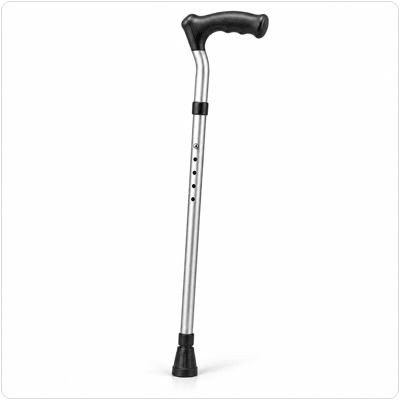
1. Adjustable walking stick
Who may benefit: May help an older adult who needs a modest amount of support while walking and has been assessed as suitable for a single-point aid.
What to check: Check handle comfort, height adjustment, rubber tip condition and whether the base suits the person’s balance. A stick is not the right solution for everyone; a physiotherapist or clinician can advise on fit and use.
Price note: Example listings range from under ₹500 to over ₹2,000, depending on design and features; prices vary by seller.
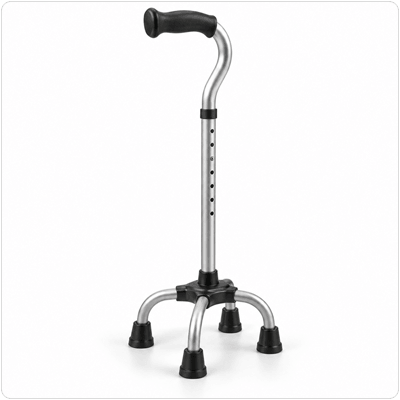
2. Quad cane or multi-point walking stick
Who may benefit: Offers a wider base than a single-point stick and may be considered when a little more standing support is needed.
What to check: More contact points do not automatically make it right for every user. Check weight, base placement, gait pattern and whether the cane catches on doorways or uneven flooring.
Price note: Compare models in person where possible; confirm the product’s weight limit and return policy.
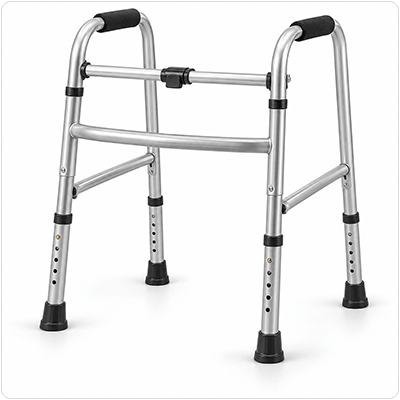
3. Folding walker
Who may benefit: May suit someone who needs more support than a walking stick provides and can safely manage the walker’s sequence of movement.
What to check: Check height, grip, frame width, brakes if fitted, folded size and ability to manoeuvre through the home. Have a qualified professional demonstrate correct use if balance is uncertain.
Price note: Example Indian listings include basic walkers around ₹1,000, with models and prices varying by frame and features.
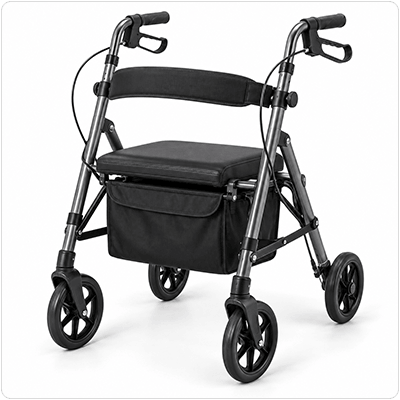
4. Rollator walker with wheels and seat
Who may benefit: Can suit some people who need walking support and benefit from being able to sit and rest, provided they can operate the brakes safely.
What to check: Test brake control, seat height, wheel stability and turning space. It may not be appropriate for someone who cannot reliably control the device or has been advised to use a different aid.
Price note: Usually costs more than a basic walker; check availability of replacement parts and service.
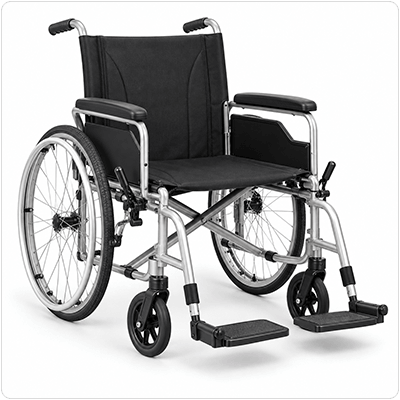
5. Manual wheelchair
Who may benefit: May help with longer distances or when walking is limited, with the user propelling it or a caregiver pushing it depending on ability.
What to check: Confirm seat width, user weight limit, footrests, brakes, folding needs, pressure comfort and doorway access. A wheelchair does not automatically replace a suitable walking aid for short distances.
Price note: Marketplace examples for basic manual wheelchairs are commonly in the several-thousand-rupee range; specialised models can cost substantially more.
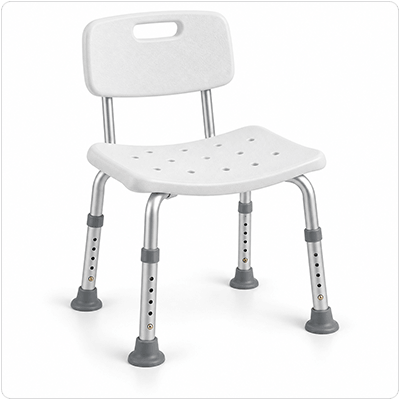
6. Shower chair or bath seat
Who may benefit: Can help someone who cannot stand comfortably throughout bathing or who tires easily.
What to check: Choose a stable, corrosion-resistant model with suitable seat height, non-slip feet and appropriate weight capacity. Ensure it fits the shower space and does not block safe access.
Price note: Example Indian product listings range from roughly ₹2,000 to ₹4,500 for common shower-chair styles.
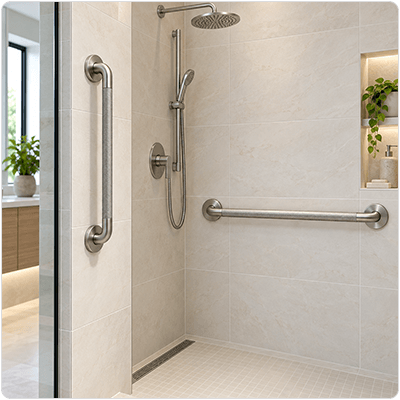
7. Properly installed bathroom grab bars
Who may benefit: Provide a fixed handhold near a shower, bath or toilet when placed and installed for the user’s needs.
What to check: Grab bars must be securely anchored into suitable structural support. Towel rails and suction accessories should not be treated as load-bearing supports unless specifically designed and installed for that purpose. Seek professional installation when unsure.
Price note: Price depends on length, material, mounting type and installation. Budget for installation, not just the bar.
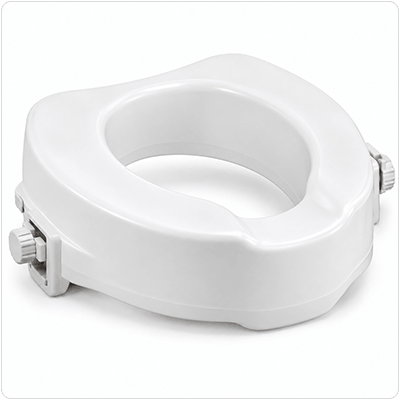
8. Raised toilet seat
Who may benefit: May reduce how far a person needs to lower or raise their body when using the toilet.
What to check: Check toilet shape, seat height, weight rating, stability and whether side supports are needed. A raised seat that shifts or does not fit the toilet securely can be hazardous.
Price note: One Indian specialist listing showed a raised toilet seat at about ₹1,749; prices vary by model and stock.
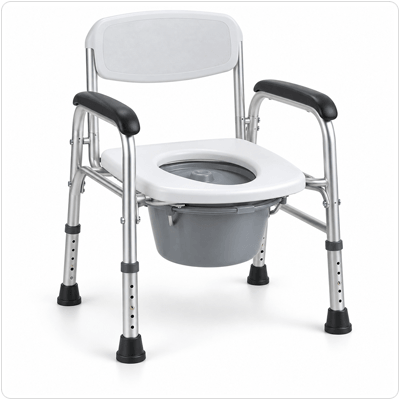
9. Bedside commode chair
Who may benefit: May help when walking to the bathroom is difficult, especially overnight or during recovery.
What to check: Consider height, stability, armrests, ease of cleaning, bucket handling, privacy and placement. The user must be able to transfer to it safely, with assistance if required.
Price note: Basic models may cost a few thousand rupees; check dimensions and cleaning requirements before purchase.
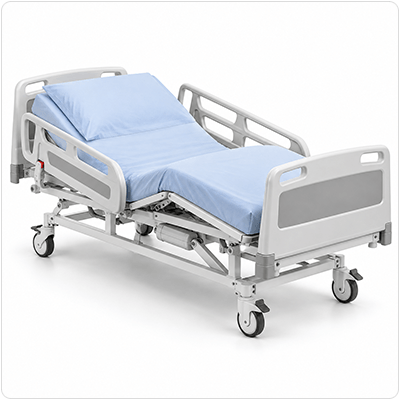
10. Adjustable hospital-style bed
Who may benefit: May be useful for people who spend extended periods in bed or need a more suitable position for care, transfers or comfort.
What to check: Compare manual and electric adjustment, height range, safe working load, mattress compatibility, side-rail design, delivery, servicing and caregiver access. Bed rails can create entrapment or climbing risks and need an individual safety assessment.
Price note: An India home-care guide estimates basic manual beds around ₹15,000–₹35,000, semi-electric models around ₹35,000–₹60,000 and fully electric models around ₹60,000–₹1.5 lakh or more. These are broad estimates, not fixed market prices.
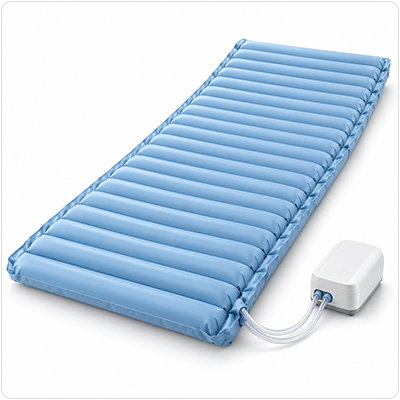
11. Pressure-relief mattress or overlay
Who may benefit: May be considered for someone who spends long periods in bed and has a pressure-injury risk identified by a healthcare professional.
What to check: Choose according to clinical need, bed compatibility, maintenance and the person’s ability to change position. A mattress alone does not replace regular repositioning, skin checks or a clinician-led pressure-care plan.
Price note: Prices vary widely by foam type, alternating-air features and size. Ask the care team what level of support is needed before buying.
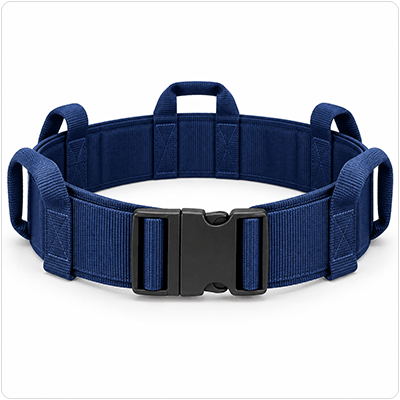
12. Transfer belt
Who may benefit: Can be used by trained caregivers to assist certain standing or pivot transfers when appropriate.
What to check: It is not a lifting handle and is not suitable for every person or every transfer. Training is essential; avoid use where medical conditions, wounds, devices or movement restrictions make it unsuitable.
Price note: Availability and pricing vary by design and supplier. Ask a physiotherapist or occupational therapist whether it is appropriate.
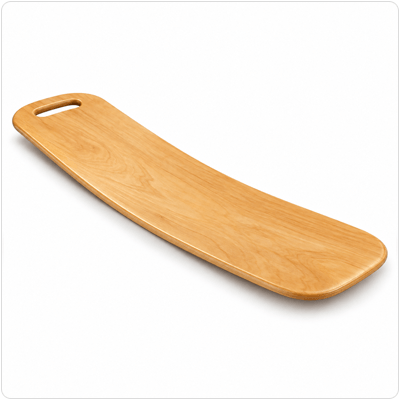
13. Slide sheet or transfer board
Who may benefit: May help trained caregivers reduce friction or bridge a gap during specific bed, chair or wheelchair transfers.
What to check: These products are not interchangeable. A transfer board requires suitable sitting balance and transfer ability; slide sheets require correct technique and often more than one trained helper. Never improvise a transfer if the person cannot be moved safely.
Price note: Cost depends on material, size and intended use; ask the clinician or equipment supplier about training and suitability.

14. Adult incontinence products and washable bed protectors
Who may benefit: May help manage urinary or bowel incontinence while supporting dignity and protecting clothing and bedding.
What to check: Choose the correct fit and absorbency, change products as appropriate, clean and dry skin, and watch for irritation. A new or sudden change in continence should be discussed with a healthcare professional rather than treated only as a product issue.
Price note: Retail guides published in 2026 list common 10-piece packs at roughly ₹250–₹600 for many mainstream options, with premium or imported products costing more. Pack size and absorbency change the cost per use.
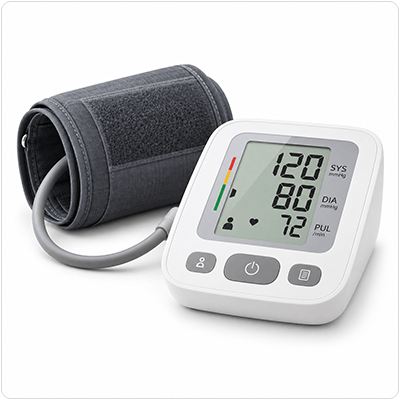
15. Upper-arm digital blood pressure monitor
Who may benefit: May be useful when home blood-pressure monitoring has been recommended and the person or caregiver can follow the measurement instructions.
What to check: Choose a validated device with a cuff that fits the arm. Use the recommended posture and measurement schedule, keep a record if requested by the clinician, and do not change medication based on one reading without medical advice.
Price note: Omron’s Indian product page listed the HEM-7124 at a recommended retail price of ₹2,166 when checked. Prices and availability can change.
How do you compare products before buying?
Use the following checklist before ordering equipment or accepting a recommendation. A low price is not a saving if the product does not fit, cannot be installed correctly or is unsuitable for the older adult.
- Need: What exact task is difficult, and has the older adult had a relevant assessment?
- Fit: Are the height, width, seat dimensions, cuff size or weight capacity suitable?
- Safety: Are brakes, feet, fasteners, joints and electrical components in good condition?
- Home compatibility: Will the item fit through doorways and work in the bathroom, bedroom or corridor where it will be used?
- Use and training: Can the older adult or caregiver operate it correctly? Is training required?
- Cleaning and maintenance: Can it be cleaned, disinfected, serviced or repaired as needed?
- Total cost: Include delivery, installation, accessories, consumables, maintenance and replacement parts.
- Returns and warranty: Confirm warranty coverage, service access, return rules and spare-part availability.
Should you buy, rent or consider second-hand equipment?
| Option | May make sense when… | Check before committing |
|---|---|---|
| Buy new | The item will be used regularly or needs a precise fit, hygiene control or dependable warranty. | Fit, quality, warranty, service, consumable costs and return policy. |
| Rent | Equipment is needed temporarily after surgery, during rehabilitation or for a time-limited care arrangement. | Delivery and pickup fees, deposit, sanitisation, maintenance, damage terms and rental duration. |
| Buy second-hand | The item is simple, structurally sound and can be thoroughly inspected; budget is a key concern. | Inspect frame, brakes, wheels, fasteners, rust, cracks, electrical safety and cleaning history. Avoid used products where hygiene, safety or hidden damage cannot be verified. |
Rental availability and pricing differ by city and provider. For example, one Indian rental provider listed a Fowler bed at ₹2,750 per month and a wheelchair at ₹1,500 per month, while other providers offer different rates, deposits and inclusions. Treat these as provider-specific examples, not national averages.
What safety mistakes should families avoid?
- Buying a cane, walker or wheelchair without checking fit, user ability and the home layout.
- Installing a grab bar into a surface that cannot securely support it, or relying on towel rails for balance.
- Assuming bed rails are automatically safe; rails can create entrapment or climbing risks for some users.
- Using a transfer belt, board or slide sheet without appropriate assessment and training.
- Treating a blood-pressure reading or another home-monitoring result as a diagnosis, or changing treatment without clinical guidance.
- Buying equipment before checking whether a simpler home modification, correct footwear, lighting or caregiver support would address the problem.
Can any government schemes help with assistive devices?
India’s Department of Empowerment of Persons with Disabilities administers the Assistance to Persons with Disabilities for Purchase/Fitting of Aids/Appliances (ADIP) scheme, which supports eligible persons with disabilities in obtaining specified assistive devices through approved implementing agencies. Eligibility, approved products, income criteria and application procedures can change; families should check the current official scheme guidance rather than assume every older adult qualifies.
Official scheme information: https://depwd.gov.in/en/adip/
How can Senior Care Joy help families take the next step?
Products are only one part of an effective care plan. Families may also need help from home-care providers, trained caregivers, rehabilitation professionals or residential care services. Senior Care Joy helps families discover elder-care services and providers so they can explore options that fit their circumstances.
Before arranging care or buying equipment, confirm the provider’s qualifications, what is included in the service, the staff’s experience with the relevant equipment, emergency arrangements and total costs. A listing is a starting point for research, not a guarantee that every service or product is suitable for every person.
Explore Senior Care Joy to learn more about elder-care services and support options for your family.
Key takeaways
- Start with the daily task or safety problem, not with a product trend.
- Match equipment to the older adult’s mobility, health, body measurements and home environment.
- Get professional guidance for mobility aids, transfers, pressure care and equipment that affects medical care.
- Compare the total cost of ownership, including installation, cleaning, maintenance, consumables and servicing.
- Renting can be practical for temporary needs; second-hand equipment requires careful inspection.
- Confirm current prices, stock, warranty and return policies directly with the seller.
- Use Senior Care Joy to explore wider elder-care support when equipment alone is not enough.
The most useful elder-care equipment is not necessarily the most advanced or expensive. It is the product that fits the older adult, solves a real problem and can be used safely and consistently. Take time to assess the need, check the fit and ask for professional guidance where appropriate.
Editorial and pricing note: Prices are indicative examples from specific Indian listings and sources checked in October 2026, not endorsements or guaranteed market-wide rates. Prices, discounts, availability, product specifications and rental terms may change. The illustrative scenarios and recommendations are general information, not individual clinical advice.