Summary
A familiar song. A few soft notes. And suddenly, an elder who hasn’t spoken for weeks begins to hum, smile, or even dance. That’s the quiet magic of music therapy — a proven, science-backed approach that helps seniors with dementia, Alzheimer’s, or depression reconnect with memory, emotion, and self.
In India, where music is deeply woven into daily life and culture, it holds even greater healing potential. Whether it’s an old Lata Mangeshkar melody or a devotional bhajan, music can comfort the heart, calm anxiety, and awaken lost connections.
This article by Senior Care Joy explores how music therapy works, why it’s effective for seniors with dementia and depression, and how families can introduce it safely and meaningfully at home or in elder care settings.
What Is Music Therapy?
Music therapy is the clinical use of music to support emotional, cognitive, and physical well-being. It’s more than just listening to songs — it involves structured engagement with rhythm, melody, and memory under the guidance of trained therapists or caregivers.
Forms of music therapy include:
- Listening Therapy – Playing familiar tunes to trigger recognition and calm.
- Active Participation – Singing, clapping, or playing simple instruments.
- Reminiscence Therapy – Discussing memories tied to specific songs.
- Movement-Based Sessions – Gentle dancing or rhythmic movement to boost circulation and joy.
Senior Care Joy Insight: Music therapy is not entertainment — it’s emotional medicine. It connects when words fail and revives memories that may seem lost.
How Music Impacts the Aging Brain
Neurological studies show that music activates multiple areas of the brain, including those linked to emotion, memory, and motor coordination.
Scientific Benefits for Seniors:
| Area | Impact | Research Insight |
|---|---|---|
| Memory Recall | Familiar songs trigger memories from long-term storage, even in advanced dementia | University of Helsinki (2021): Seniors showed 60% improvement in recall with personalized playlists |
| Mood Regulation | Boosts dopamine and reduces cortisol, improving mood | NIH (2022): Music lowers stress hormones and depression rates |
| Language Stimulation | Encourages speech through rhythm and melody patterns | Alzheimer’s Research UK: Singing aids word retrieval |
| Motor Function | Rhythmic beats improve gait and coordination | American Geriatrics Society: 20% improvement in movement control with rhythmic therapy |
Why It Matters: In dementia, where cognitive decline disrupts communication, music becomes a bridge — bypassing damaged brain areas to reach preserved emotional pathways.
Dementia and Depression: The Dual Challenge
Many seniors living with dementia also experience depression and anxiety — often due to confusion, isolation, and loss of identity.
Common symptoms include:
- Withdrawal or loss of interest in conversation.
- Irritability, restlessness, or sleep disturbances.
- Low appetite or lack of motivation.
In such cases, music therapy helps restore emotional stability and reconnects seniors to comforting, familiar experiences.
“My mother, who has Alzheimer’s, barely recognized us some days,” shares a family caregiver from Bangalore. “But when we played her favorite old bhajans, she’d hum along — and for a few minutes, she was her old self again.”
Practical Music Therapy Techniques for Families
You don’t need formal training to introduce music therapy at home. What matters most is intent, sensitivity, and familiarity.
1. Create a Personalized Playlist
Start with songs from your parents’ youth — their favorite singer, film, or devotional music.
Tip: Old Hindi classics, ghazals, or folk songs often evoke the strongest responses.
2. Morning Ragas, Evening Calm
Play soothing instrumental ragas (like Raag Bhairav or Yaman) in the morning and calming ones (like Raag Kafi) at night to regulate mood and sleep.
3. Encourage Gentle Participation
Invite your parents to hum, clap, or tap along. Even small participation builds confidence and joy.
4. Use Music During Daily Routines
- Play familiar tunes during mealtimes or bath routines to ease resistance.
- Soft music before bedtime helps reduce sundowning symptoms in dementia.
5. Make It Social
Host mini music evenings — invite family, grandchildren, or a neighborhood bhajan group.
The sense of belonging amplifies the therapeutic effect.
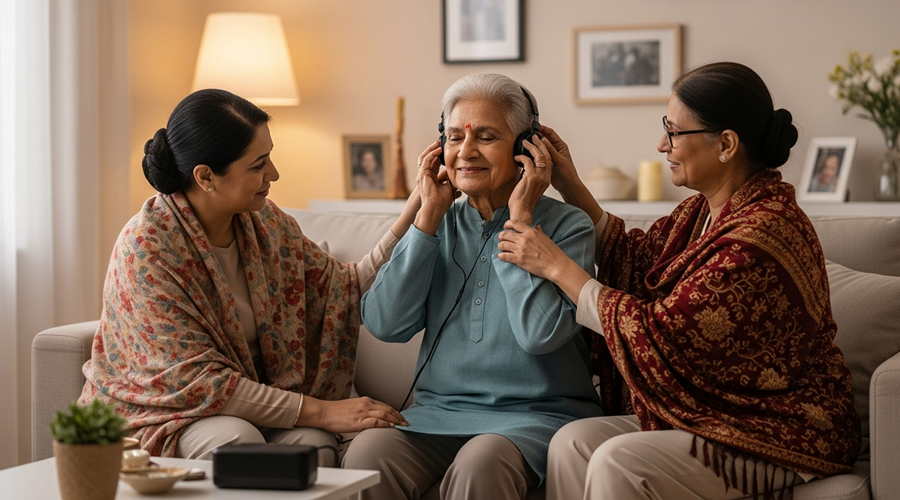
Senior Care Joy Tip: Avoid headphones for long periods. Use open speakers or live music when possible to maintain connection and engagement.
Safety and Sensitivity in Music Therapy
While music therapy is safe and non-invasive, it requires emotional awareness and balance.
Do:
- Keep volume mo derate and clear.
- Observe emotional reactions — smiles, tears, tapping — all are forms of response.
- Use songs linked with positive memories.
Don’t:
- Play very loud or fast-paced music.
- Use tunes associated with grief or trauma.
- Force participation — let the music invite, not demand.
“In dementia care, less is often more. A short, soothing melody can calm the mind better than hours of background noise.” — Senior Care Joy Wellness Partner
Real-Life Story: A Song That Brought Back a Smile
At a senior care home in Pune, 82-year-old Mrs. Leela was diagnosed with mid-stage Alzheimer’s. She had stopped speaking much and often stared blankly for hours.
One day, a caregiver softly played “Lag Jaa Gale” — a song from Leela’s youth. Within moments, she began humming, her eyes lit up, and she smiled at her daughter sitting nearby.
That one moment of recognition brought comfort not just to Leela, but to her entire family. Since then, music has become part of her daily routine — a ritual of peace and connection.
Senior Care Joy Reflection: Every melody can be a bridge — between past and present, silence and speech, confusion and comfort.
The Role of Professional Music Therapists
In advanced dementia or depression cases, professional music therapists can design personalized programs based on health history and cognitive level. Sessions may include:
- Guided singing and breathing exercises.
- Drum or rhythm circles to enhance focus.
- Emotion-based sound therapy for relaxation.
Music therapy is now increasingly available through hospitals, senior care centers, and home-based wellness providers in India.
Senior Care Joy connects families with verified wellness partners offering holistic programs — including music therapy, yoga, and cognitive activities — for senior emotional and mental health.
Closing Summary
Music is more than sound — it’s memory, emotion, and love in motion.
For seniors facing dementia or depression, it becomes a lifeline — unlocking hidden memories, easing loneliness, and reigniting joy.
In a world where words fade, music remains — steady, familiar, and healing.
At Senior Care Joy, we believe every elder deserves not just care, but connection — and sometimes, all it takes is a song.
Key Takeaways
- Music therapy helps manage dementia and depression by stimulating memory and emotion.
- Familiar songs evoke comfort and recognition in seniors.
- Families can practice simple music therapy at home with safe, soothing playlists.
- Professional music therapists can enhance emotional and cognitive outcomes.
- Senior Care Joy promotes holistic well-being through verified wellness and care services.