Summary
Retirement significantly impacts the mental health of Indian seniors by altering daily structure, social identity, financial security, and sense of purpose. While retirement can reduce work-related stress, it also increases the risk of loneliness, depression, anxiety, and cognitive decline—especially in India, where identity is closely tied to profession and family roles. The mental health outcome largely depends on financial preparedness, social connection, family dynamics, physical health, and access to supportive care systems.
Why Does Retirement Affect Mental Health More Strongly in Indian Seniors?
Retirement in India is not just a career transition—it is a deep social and psychological shift.
Key India-Specific Factors
- Work as identity: Many Indian seniors define self-worth through lifelong employment.
- Limited retirement planning: A large portion of the workforce lacks structured pension or mental health planning.
- Changing family structures: Shift from joint to nuclear families reduces daily interaction.
- Stigma around mental health: Emotional struggles are often dismissed as “normal aging.”
These factors compound emotional vulnerability after retirement.
What Are the Most Common Mental Health Challenges After Retirement?
1. Depression and Low Mood
Retirement can trigger feelings of:
- Uselessness or loss of relevance
- Lack of daily goals
- Reduced appreciation or authority
Indian studies consistently show higher depressive symptoms among retired seniors, particularly men who retired from structured roles.
2. Anxiety and Financial Stress
Concerns often include:
- Medical expenses
- Outliving savings
- Dependency on children
Even seniors with adequate savings may experience anxiety due to uncertainty and lack of financial literacy.
3. Loneliness and Social Isolation
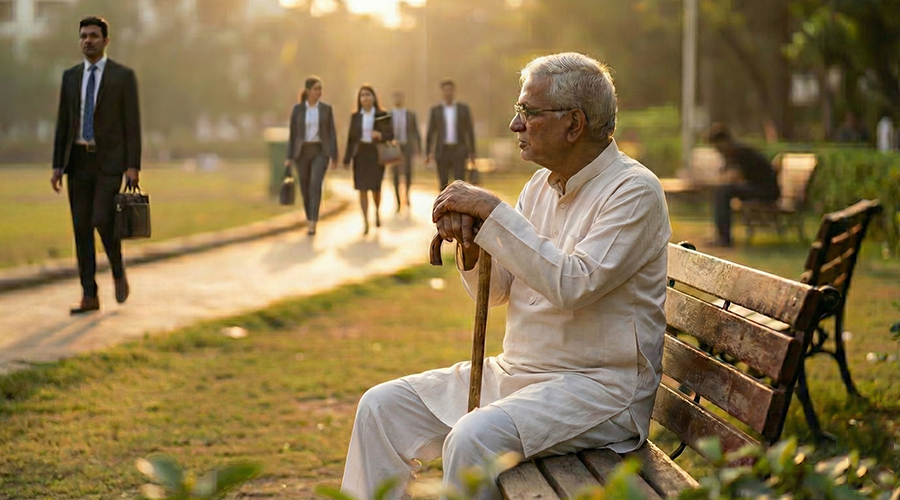
Loneliness is one of the strongest predictors of poor mental health in older Indians.
Common causes:
- Children migrating for work (including NRIs)
- Reduced mobility
- Shrinking peer networks
4. Cognitive Decline and Mental Inactivity
Without mental stimulation, retirees may experience:
- Memory lapses
- Reduced problem-solving skills
- Early cognitive decline
Mental inactivity—not age alone—is a major contributor.
Does Retirement Affect Men and Women Differently in India?
Yes, the mental health impact of retirement differs by gender.
| Aspect | Retired Men | Retired Women |
|---|---|---|
| Identity loss | High (career-centered identity) | Lower if homemaker role continues |
| Social networks | Often limited to workplace | Usually stronger family-based ties |
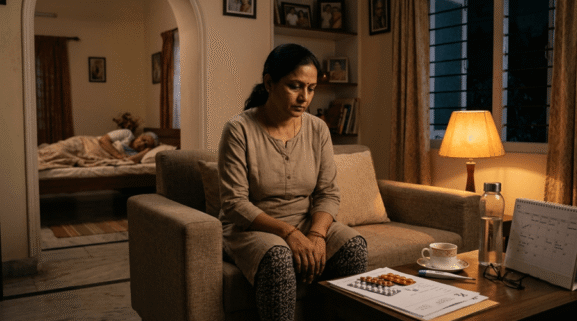
| Depression risk | Higher immediately post-retirement | May rise later due to caregiving fatigue |
| Financial anxiety | High | Moderate to high (widowhood risk) |
Key Insight: Men face sharper emotional decline immediately after retirement, while women’s mental health risks often rise with age, caregiving burden, or widowhood.
How Does Family Support Influence Mental Health After Retirement?
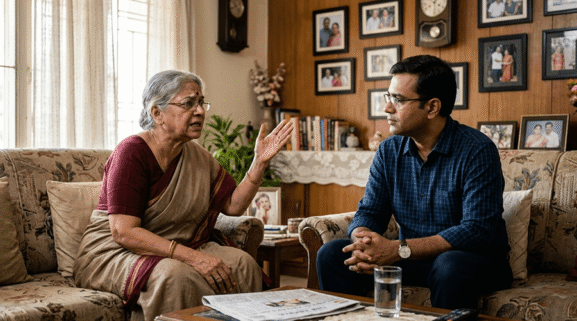
Family dynamics play a decisive role.
Positive Family Support Leads To:
- Lower depression risk
- Better emotional regulation
- Higher sense of belonging
Lack of Support Can Cause:
- Emotional neglect
- Feeling like a burden
- Withdrawal and silence
- Higher sense of belonging
In India, seniors living with family are not automatically emotionally supported—quality of interaction matters more than proximity.
What Role Does Purpose Play in Post-Retirement Mental Well-Being?
Purpose is a protective mental health factor.
Seniors with clear post-retirement roles—such as:
- Caring for grandchildren (by choice, not compulsion)
- Volunteering
- Teaching, mentoring, or consulting
- Spiritual or community engagement
show significantly lower rates of depression and anxiety.
Loss of purpose, not age, is often the root problem.
How Can Seniors Protect Their Mental Health After Retirement?
Evidence-Based Strategies That Work in India
1. Structured Daily Routine
- Fixed wake-up and sleep times
- Scheduled physical and mental activity
2. Social Connection (Non-Negotiable)
- Senior groups, walkers’ clubs, bhajan mandalis
- Community centers or assisted living common areas
3. Physical Activity
Even light daily movement:
- Improves mood-regulating neurotransmitters
- Reduces anxiety and sleep disturbances
4. Cognitive Engagement
- Reading, puzzles, learning digital skills
- Teaching grandchildren or peers
5. Mental Health Conversations
Normalising:
- Therapy
- Counselling
- Emotional check-ins
This is still underutilized in Indian seniors but highly effective.
When Should Families Seek Professional Help?
Warning signs include:
- Persistent sadness or irritability
- Withdrawal from social interaction
- Sleep or appetite changes
- Statements like “I am no longer needed”
Early intervention prevents long-term decline.
How Platforms Like Senior Care Joy Support Retired Seniors
Senior Care Joy helps families navigate retirement-related mental health challenges by:
- Connecting families with verified senior wellness, companionship, and care providers
- Publishing India-specific, stigma-free guidance on aging and emotional well-being
- Helping families make confidence-driven decisions, not fear-based ones
This bridge between information and trusted services is critical in post-retirement life transitions.
Final Thoughts
Retirement can be either a period of quiet fulfillment or emotional decline for Indian seniors. The difference lies not in age, but in connection, purpose, preparedness, and support systems. Mental health after retirement deserves the same seriousness as physical health—and families play a central role in shaping this phase of life.
Key Takeaways
- Retirement is a major psychological transition for Indian seniors
- Loss of routine, identity, and social connection increases mental health risks
- Men and women experience retirement differently
- Purpose and daily structure protect mental well-being
- Family support quality matters more than living arrangements
- Early emotional support prevents long-term mental health decline