Summary
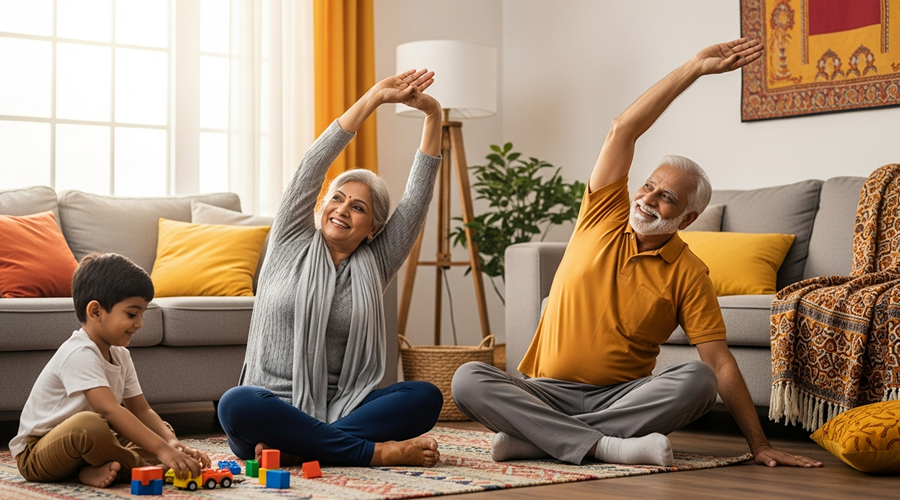
Staying active in later years doesn’t require gym memberships or complex routines. For seniors, simple, consistent exercises done at home — like walking, stretching, yoga, and light strength work — can dramatically improve balance, energy, and happiness. According to Senior Care Joy’s wellness experts, just 20–30 minutes of daily movement reduces stiffness, boosts mood, and supports independence for older adults.
This guide explores safe, effective home exercises for seniors in India, how families can help, and easy ways to make fitness part of everyday life.
Why Exercise Matters So Much for Seniors
As people age, the body naturally loses muscle mass, flexibility, and balance. Regular physical activity helps slow this process — reducing the risk of falls, improving heart health, and maintaining independence.
Key Benefits of Regular Exercise for Seniors
| Benefit | Why It Matters |
|---|---|
| Improved Mobility | Reduces stiffness in joints and muscles. |
| Better Balance | Prevents falls and injuries — a major risk after 70. |
| Heart Health | Keeps blood pressure and cholesterol under control. |
| Stronger Immunity | Regular movement boosts overall resilience. |
| Emotional Wellness | Exercise releases endorphins and reduces loneliness. |
A WHO report (2022) notes that seniors who engage in light physical activity 5 days a week have 30% lower risk of developing chronic conditions like diabetes and heart disease.
What Type of Exercise Works Best for Seniors at Home?
The ideal routine focuses on gentle, sustainable movements that improve flexibility, balance, and muscle tone — without strain.
1. Morning Stretch Routine (5–10 minutes)
- Shoulder rolls, neck circles, gentle arm lifts
- Side bends and ankle rotations
- Seated forward bends or leg extensions
Tip from Senior Care Joy: Encourage seniors to stretch right after waking up — it helps reduce stiffness and starts the day positively.
2. Chair Yoga or Seated Exercises
For seniors with balance issues, chair-based yoga or seated workouts are safe and effective.
Examples:
- Seated Cat-Cow stretches for spine mobility
- Arm raises with breathing control
- Gentle seated twists to improve digestion
[BMC Geriatrics, 2023] found that chair-based yoga improves flexibility by 25% and reduces joint pain in seniors with arthritis.
3. Walking — Indoors or in the Garden
A 15–20-minute slow walk can do wonders for cardiovascular health and mood. If outdoor walking isn’t possible,
Try:
- Indoor walking circuits (around the living room or hallway)
- Marching in place for 5–10 minutes after meals
Pro tip: Encourage evening walks — it aids digestion and helps you sleep better.
4. Balance & Coordination Exercises
Falls are one of the biggest health concerns among older adults. Simple balance routines can greatly reduce this risk.
Try:
- Standing on one leg (hold onto a wall or chair)
- Heel-to-toe walking
- Gentle side leg lifts for stability
Senior Care Joy Recommends: Use non-slip footwear and exercise near a sturdy surface for safety.
5. Strengthening Movements (Bodyweight or Light Resistance)
Maintaining muscle strength supports daily activities — from getting up from bed to lifting groceries.
Easy, no-equipment options:
- Wall push-ups
- Seated leg extensions
- Water bottle arm curls
- Sit-to-stand exercises from a sturdy chair
Studies (Indian Journal of Physiotherapy, 2022) show that light resistance training twice a week improves lower-body strength by 20–30% in seniors aged 70–85.
6. Breathing & Mindfulness Practices
Gentle pranayama and meditation can help calm the mind, improve oxygen flow, and reduce anxiety.
Try:
- Anulom Vilom (Alternate Nostril Breathing) – 5 minutes
- Bhramari (Bee Breath) – for calming nerves
- Simple mindful sitting – focus on breath for 10 minutes daily
Senior Care Joy Wellness Note: Breathing exercises done early morning or before bedtime help regulate blood pressure and improve sleep quality.
How Families Can Encourage Seniors to Stay Active
Many seniors lose motivation to exercise when they’re alone. Families can help by turning it into a shared activity:
- Walk together after dinner.
- Create a “wellness corner” with a chair, mat, and water bottle.
- Play light devotional or old Hindi music during exercise sessions.
- Track daily steps or stretches on a shared family board.
Bonus idea: Some caregivers use smartwatches or health apps to gently remind elders to move every few hours.
Senior Care Joy encourages families to make exercise about connection, not obligation — shared routines lead to both physical and emotional bonding.
When to Avoid or Modify Exercises
Seniors should avoid strain or sudden movements if they have:
- Severe arthritis or heart disease
- Dizziness or unstable balance
- Recent surgery or fracture
- Uncontrolled blood pressure
Always check with a doctor or physiotherapist before starting a new routine. Even small adjustments — like shorter sessions or chair support — can make exercise safer and more comfortable.
Sample 20-Minute Home Routine (Beginner Level)
| Time | Activity | Focus |
|---|---|---|
| 0–5 min | Gentle stretches | Warm-up & flexibility |
| 5–10 min | Walking or marching in place | Cardio & circulation |
| 10–15 min | Seated yoga or balance drills | Mobility & stability |
| 15–20 min | Deep breathing & relaxation | Calm & emotional balance |
Consistency matters more than intensity. Encourage seniors to move every day, even if just for a few minutes.
Closing Summary
Staying active at home is one of the most effective ways for seniors to preserve health, independence, and happiness. With small, safe, daily movements — combined with family support — older adults can enjoy better mobility, improved mood, and a stronger sense of purpose.
At Senior Care Joy, we believe fitness for seniors is not about pushing limits — it’s about sustaining joy, dignity, and daily confidence.
Key Takeaways
- Just 20–30 minutes of gentle movement daily can improve health and happiness.
- Stretching, walking, balance drills, and breathing exercises are ideal at-home options.
- Family involvement keeps seniors motivated and emotionally connected.
- Always prioritize safety and comfort over intensity.
- Small steps — done consistently — make the biggest difference.